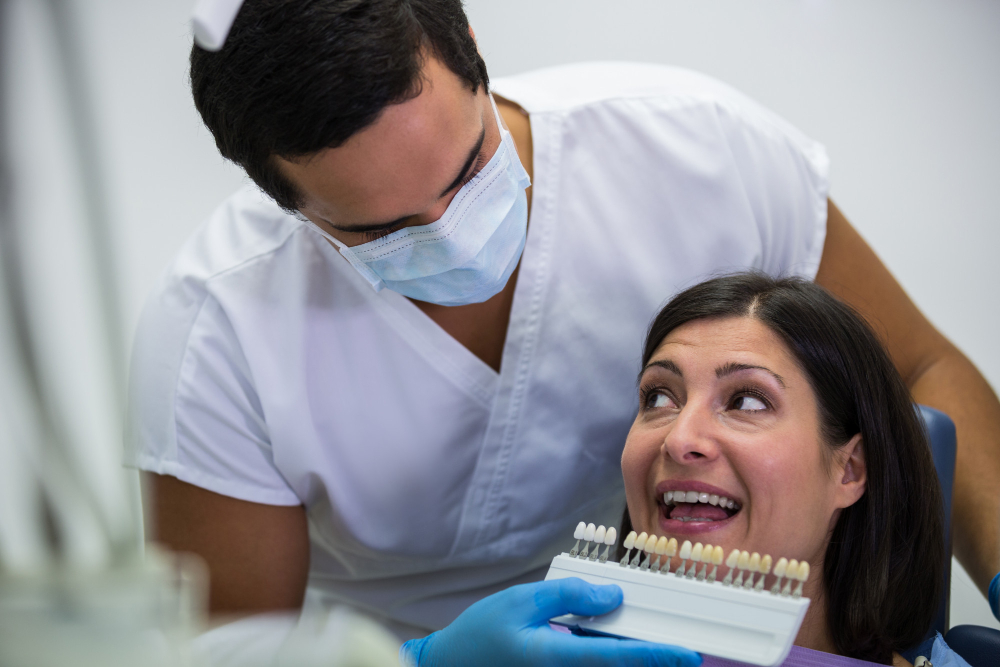
What Are Veneers?
Veneers are thin, custom-made shells that cover the front of your teeth. Dentists use them to improve the look of your smile. Often, veneers are made from porcelain or resin materials. Many people choose dental veneers to fix chipped, stained, or uneven teeth. In fact, porcelain veneers are popular because they look natural and resist stains. According to the American Dental Association, veneers are a safe and effective way to enhance your smile.
Who Is a Good Candidate for Veneers?
Not everyone is a good fit for veneers. However, many adults can benefit from them. You may be a good candidate if you have:
Still, your teeth and gums should be healthy before you get veneers. If you have gum disease or tooth decay, your dentist may suggest treating those issues first. Additionally, people who grind their teeth may not be ideal candidates, as this can damage veneers.
Benefits of Veneers
Veneers offer many advantages. First, they can quickly improve your smile. Also, they look and feel like natural teeth. Here are some key benefits:
Because of these benefits, many people choose veneers for a long-lasting smile makeover.
Risks and Considerations
While veneers have many benefits, there are also some risks. For example, the process is not reversible. Once your dentist removes enamel, it cannot grow back. Additionally, veneers can chip or crack if you bite hard objects. Some people may notice tooth sensitivity after the procedure. Also, veneers are not a good choice for people with weak teeth or severe gum disease. Before you decide, talk with your dentist about all risks and the cost of veneers. The price can vary based on location and the type of material used.
The Veneer Procedure: Step-by-Step
Getting veneers usually takes two or three visits to your dentist. Here is what you can expect:
After the veneers are placed, you can see the results right away. Many people are amazed by their veneers before and after the procedure.
Aftercare and Maintenance Tips
Taking care of your veneers is important. With good habits, they can last for many years. Here are some tips:
Although veneers resist stains, it is still wise to limit coffee, tea, and red wine. This helps keep your smile bright.
Frequently Asked Questions About Veneers
Conclusion and Next Steps
Veneers can transform your smile and boost your confidence. However, it is important to weigh the benefits and risks. Always discuss your options with a qualified dentist. They can help you decide if veneers are right for you. If you are interested in dental veneers, schedule a consultation today. Your new smile could be just a few visits away!